.png)
Every year, the DIZ Zurich publishes analyses of the LSD samples tested at the DIZ and at nine mobile drug-checking sites—as a supplement to the annual reports and to raise awareness of the specific risks associated with LSD use. The results published here are not representative of the entire drug market in the city of Zurich.
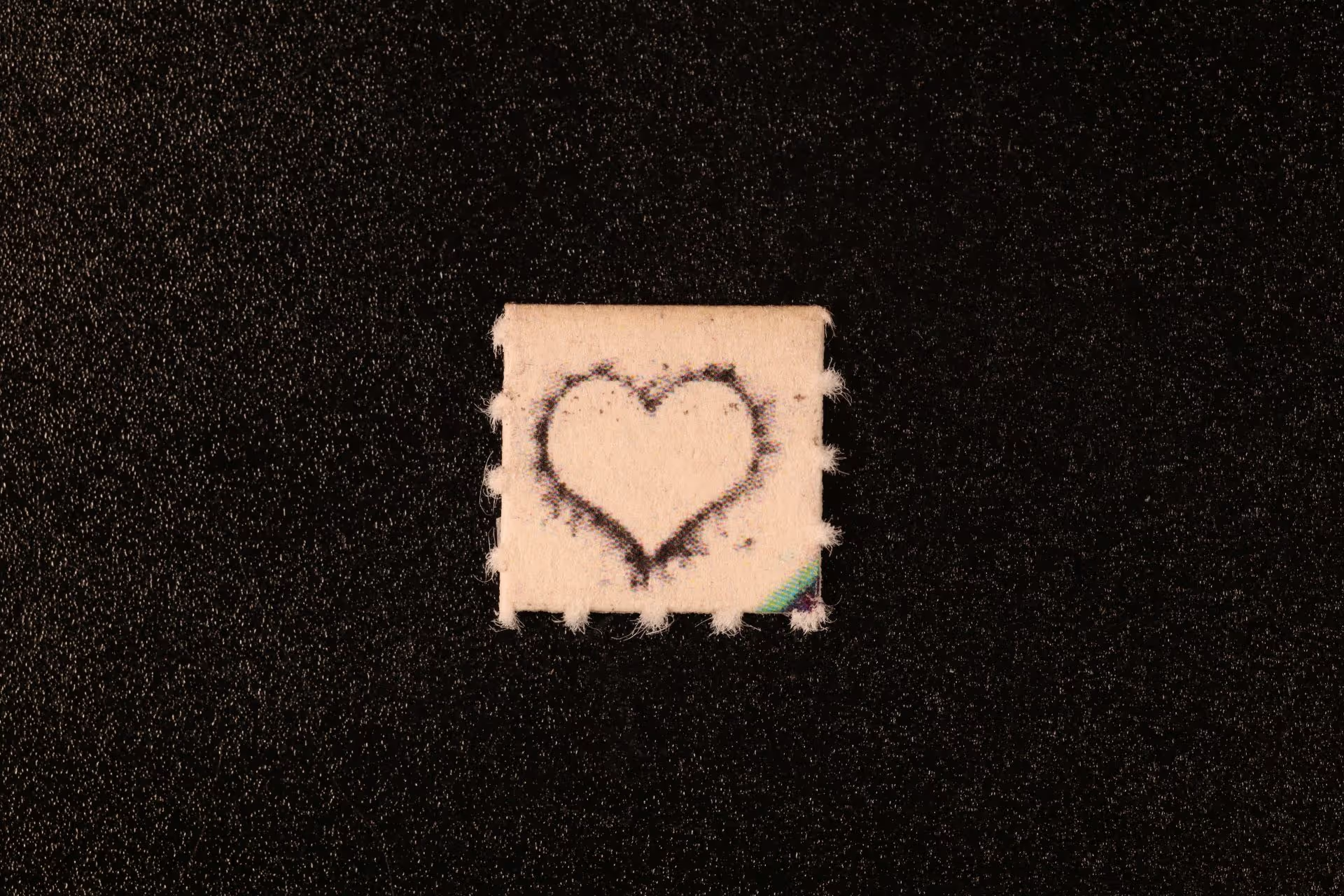
In 2025, a total of 181 patches and pills declared as LSD were submitted for analysis at the Drug Information Center (DIZ) in Zurich and at mobile drug testing sites. Of the 181 samples, 173 (95.6%) were patches; 8 samples were submitted as LSD pills. Compared to the previous year (2024: 197 samples), the number of LSD samples analyzed has decreased slightly.
The LSD-soaked paper and pills analyzed at the DIZ and during mobile drug testing events contained an average of 78.6 µg of LSD in 2025—a slight decrease from the previous year’s figure of 80.7 µg. This calculation was based on the 173 samples that contained LSD and for which quantification was possible. The range was very wide, ranging from 3.8 µg to 391.6 µg of LSD per sample.
The majority of the blots and pills labeled as LSD contained less than 75 µg of LSD (96 out of 173 samples, 55.5%); 62 samples (35.8%) fell within the mid-range of 75 to 149 µg; and 15 samples (8.7%) contained 150 µg or more. Five samples (2.9%) had a very high active ingredient content of 200 µg or more; the highest measured dose was 391.6 µg in one sample. Such doses can lead to very intense psychedelic experiences and carry an increased risk of mental health crises, particularly for inexperienced users.
While patches and pills were labeled on average at around 179 µg, they actually contained less than half that amount on average. In 21 samples, the discrepancy between the labeled and measured dosage was more than 75%—in the most extreme cases, a sample was labeled at 300 µg but contained only 3.9 µg. This persistent mislabeling leads to a distorted picture of the actual doses consumed and can result in unintentional overdoses due to additional dosing (“the 250-µg blotter myth”).
The proportion of samples containing iso-LSD remains high: 111 of the 181 samples analyzed (61.3%) contained iso-LSD in addition to LSD; iso-LSD is a stereoisomer that can occur as a degradation product or a byproduct of synthesis. Compared to the previous year, the proportion has decreased slightly. The average iso-LSD content was 52.2 µg. Although iso-LSD is considered non-psychoactive, some users report interactions; scientific evidence for this is currently lacking.
In 10 of 181 samples (5.5%), substances other than LSD were detected in very small, non-potent amounts. These were likely due to cross-contamination resulting from the reuse of storage bags (Minigrips). Substances detected included amphetamine, cocaine, 2-PEA, MDMA, ketamine, 2C-B, caffeine, and, in one case, a small amount of DOB. Eight out of 181 samples (4.4%) were mislabeled. Four samples contained neither LSD nor any other psychoactive substance. Another 4 samples contained so-called LSD analogs instead of LSD—including 1S-LSD and 1cP-LSD. In 3 additional samples (1.7%), unidentifiable substances (“unknown peak”) were detected alongside LSD, which could not be analytically determined.
In 2025, a large number of LSD samples were once again purchased online: 99 out of 181 samples (54.7%) were obtained through online channels—of the 169 samples for which the source was specified, this figure stands at 58.6%. This means that more than half of all LSD samples originated from digital sources—a proportion that is significantly lower for other substances analyzed by the DIZ (around 20%) and confirms the trend of previous years.
Key Findings for 2025
• The average LSD content in 2025 was 78.6 µg, slightly lower than the previous year’s figure (2024: 80.7 µg). The majority of samples contained low doses; a few high-dose outliers underscore the importance of testing before use.
• LSD blotter papers and pills once again contained, on average, less than half the declared active ingredient content. The discrepancy between the declared and measured amounts was particularly pronounced in 21 cases in 2025 and poses a risk of unintentional overdoses due to repeated dosing (“the 250-µg blotter myth”).
• The proportion of samples containing iso-LSD remains high at 61.3%, though it has declined slightly compared to the previous year. The incidence of surface contamination is low; unlike in 2024, when DOC was detected among other substances, the contaminants identified in 2025 are less pharmacologically critical.
• LSD continues to be obtained through digital channels at a higher-than-average rate: More than half of the samples came from the dark web or the internet—a stark contrast to other substances analyzed by the DIZ.
Further information about LSD, as well as recommendations for using it as safely as possible, can be found on our website.